


Report Materials
Why OIG Did This Review
- For dual-eligible enrollees—that is, people enrolled in both Medicare and Medicaid—access to prescription drugs is particularly important. Overall, they have very low incomes and—because they are more likely to be in poorer health than other people enrolled in Medicare—tend to use more Medicare services.
- After prescription drug coverage for dual-eligible enrollees shifted from Medicaid to Medicare Part D, Congress mandated that OIG study whether Part D formularies cover prescription drugs commonly used by dual-eligible enrollees. OIG has produced an annual report pursuant to this mandate for the last 15 years (from 2011 to 2025).
- In this data snapshot, we present trends across our annual analyses of Part D formulary coverage of the top 200 drugs used by dual eligibles to summarize our findings for Congress and the public.
What OIG Found
- Most Part D plan formularies have covered almost all of the drugs that dual-eligible enrollees commonly use since 2011, and coverage has been consistently high over the last decade.
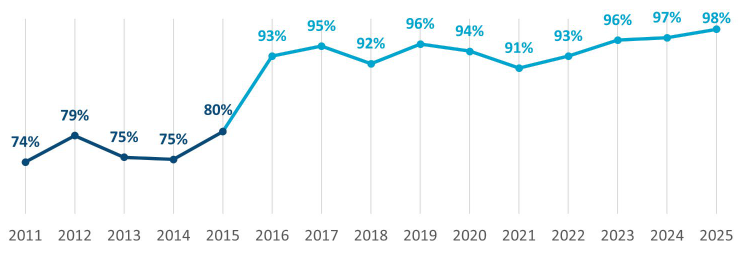
- The number of commonly used drugs covered by all formularies steadily increased since 2011, and only a small number of commonly used drugs were not covered by most formularies.
What OIG Concludes
In general, over the last 15 years dual-eligible enrollees had—and continue to have—access to the drugs they most commonly use, regardless of the Part D plan in which they enroll.
–
Notice
This report may be subject to section 5274 of the National Defense Authorization Act Fiscal Year 2023, 117 Pub. L. 263.