


Consumer Alert: Cardiovascular Testing Scam
Beware of Fraudulent Cardiovascular Testing Schemes Targeting Students and Families
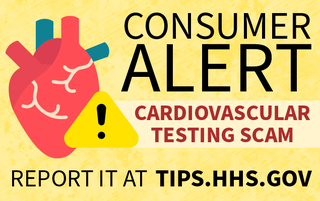
The U.S. Department of Health and Human Services, the Centers for Medicare & Medicaid Services, and the Office of Inspector General (HHS-OIG) is alerting consumers, especially parents, caregivers, athletic programs, and student athletes, about fraudulent cardiovascular testing schemes that exploit fears about sudden cardiac arrest and put young people at risk.
A recent federal case charged the medical director of a cardiovascular testing and treatment practice in the Southern District of Florida in an $89 million health care fraud scheme involving unnecessary cardiovascular testing such as EKGs and echocardiograms performed on student athletes on college campuses. According to charging documents:
- The defendant used fear-based marketing to convince families and schools that widespread cardiac screening was needed to prevent sudden cardiac death in athletes.
- The defendant falsified diagnoses to obtain reimbursement from health care benefit programs for medically unnecessary tests.
- Although acknowledging that some athletes “could be high risk,” the defendant allegedly rubber‑stamped results as “normal” within seconds—never reviewing images or identifying serious abnormalities.
- One student athlete’s test results showed a significantly enlarged heart. The defendant allegedly approved all 63 test images in about 11 seconds. The athlete died 24 days later during basketball practice from complications related to an enlarged heart.
These schemes harm patients, place student athletes at risk, and defraud taxpayers and insurers.
HHS-OIG is asking the public to stay alert and report any potentially fraudulent activity to the HHS-OIG Hotline (1-800-HHS-TIPS).
Protect Yourself: How to Spot Suspicious Cardiovascular Testing Offers
Be cautious if you observe any of the following:
- Screening programs that do not require a referral or doctor’s order from a patient’s primary care provider.
- “Free,” “no‑cost,” or low‑cost cardiovascular screening events promoted through aggressive marketing campaigns.
- Marketing materials that say every person tested will receive the same panel of tests, regardless of symptoms or medical history.
- A company that asks for insurance information even though it advertises free or low‑cost screening.
- Companies offering payments, gift cards, cash, or other incentives to schedule people for testing.
- Testing services that do not offer any opportunity to speak with a licensed medical professional about results.
- A company that won’t provide information that is required to be disclosed to student athletes and guardians under state law, such as Lindsay’s Law in Ohio.
If you see these signs, use caution. These tactics may indicate attempts to bill insurers for unnecessary services or to generate fraudulent claims.
Best Practices: How to Protect Yourself and Your Family
- Avoid cardiovascular testing programs that bypass your doctor.
- Diagnostic testing should occur only after a physician with an established doctor–patient relationship assesses what tests are appropriate.
- A doctor cannot determine which tests you need without conducting a proper clinical evaluation.
- Ask questions before agreeing to any cardiovascular testing offered in community or school environments.
- Who is interpreting the results?
- Will a licensed clinician review the images?
- How will abnormal findings be communicated?
If you are unsure, contact your health care provider before consenting.
What To Do if You Suspect Fraud
If you believe you have encountered a fraudulent cardiovascular testing program or have been billed for unnecessary tests:
- Report it to the HHS‑OIG Hotline at TIPS.HHS.GOV or 1-800-HHS-TIPS.
- You may also notify your insurer and your state insurance department.
Awareness and quick reporting help prevent harm and hold bad actors accountable.