Fraud, Waste, and Abuse for Grantees
The Department of Health and Human Services (HHS) administers Federal funds intended to provide critical services to American Indian and Alaska Native (AI/AN) communities. These funds go to programs in Indian Country including Head Start, Low Income Home Energy Assistance programs, and Indian Health Service (IHS).
Unfortunately, sometimes the funds intended to provide services are stolen through fraudulent schemes. Fraud diverts these resources away from the AI/AN community and into the pockets of wrongdoers. To ensure that these funds are used for their intended purposes, it is important to know the vulnerabilities that could lead to fraud.
In addition, there are multiple Federal fraud and abuse laws that apply to grantees, also referred to as HHS award recipients and subrecipients. These laws are generally designed to make sure that the funds are being used for their intended purposes and providing quality services. It is important to understand what conduct violates these Federal fraud and abuse laws.
Course Objectives
By the end of this course, you will be able to:
- define fraud, waste, and abuse;
- recognize OIG's role in fighting fraud, waste, and abuse;
- identify prevention, reporting, and self-disclosing measures for fraud, waste, and abuse;
- understand what conduct violates Federal fraud and abuse laws applicable to grantees; and
- identify the risk areas that could lead to violation of these Federal laws.
Resources to Help You
In this course, you will find job aids and helpful resources. If you miss resources as you go through the training, you can find them all in the Resources to Help You lessons of the course.
What is Fraud, Waste, and Abuse?
What is Fraud, Waste, and Abuse?
Fraud is an intentional or deliberate act to deprive another of property or money by deception or other unfair means. The ways in which fraud occurs are as unique as the individual perpetrators, their motives, and the situations they exploit. For the purposes of this training, fraud is intentionally submitting false information to the Government (including situations in which you should have known the information was false) to get money or a benefit.
Waste includes practices that, directly or indirectly, result in unnecessary costs to federally funded programs, such as overusing services. Waste is generally not considered to be caused by criminally negligent actions but rather by the misuse of resources.
Abuse includes actions that may, directly or indirectly, result in unnecessary costs to federally funded programs. Abuse involves paying for items or services when there is no legal entitlement to that payment.
The Fraud Triangle below illustrates the three elements that are often present in environments where fraud occurs. The elements are 1) pressure, 2) opportunity, and 3) rationalization. By considering the three sides of The Fraud Triangle when creating internal control strategies, your organization can help prevent and root out fraud.
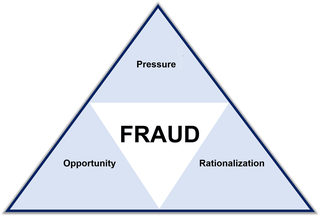
Select the tabs below to learn more about the elements of The Fraud Triangle. For easy reference, a job aid is at the bottom of the page.
What is going on in someone’s life that drives them to commit fraud? Pressure sometimes involves personal (internal) or community (external) situations that create a demand for things such as more money, increased community status, or employment promotions. Here are two examples.
External Pressure: Mary oversees a Tribal Head Start program and should use funds to promote school readiness of children from birth to age five from low-income families. Members in Mary’s community are pressuring her to use funds in ways that are not within the terms of the grant. Mary thinks that appeasing those community members might put her in a better position for future employment opportunities or pay raises.
Internal Pressure: Robert is responsible for tracking expense reports for the Tribe's federally funded health program. Robert has credit card debt, the monthly payment is due soon, and Robert knows he does not have the funds to make the payment. Robert is stressed and thinks to himself, "I could easily falsify an expense report, use the money to make my credit card payment, and because I track the funds, no one would ever know.”
Opportunity, as it relates to fraud, is the chance to take advantage of a situation. Opportunity involves both the knowledge and ability to commit fraud. Here are two examples.
John oversees the budget for a Native Youth Initiative for a Leadership, Empowerment, and Development grant program and approves paychecks. Paychecks should be double checked by someone other than John, but John's organization doesn't currently have a process for this. Because John knows that no one will review the checks before they go out to employees, he often pays himself and others more money than is associated with the hours worked.
Shelly, a program director for a Native Language Preservation program, hires her brother as a contractor to repair the program’s office building. She pays him double what would normally be paid for services because she knows he needs the money.
Rationalization is the attempt to explain or justify behavior or an attitude with logical reasons, even if the reasons are not appropriate. There are two aspects to rationalization:
- The individual must decide that the perceived gain from fraudulent activity outweighs the risk of being caught.
- The individual needs to justify the fraud. Some examples of justification include the attitude that "everyone is doing it," job dissatisfaction, perceived entitlement, helping one’s family financially, or preserving one's status.
Here are two examples.
Jane is a teacher for the Tribe's Head Start program. Weekly, she takes home classroom materials such as crayons, printer paper, and pencils for her middle school children to use for their homework. She rationalizes this by acknowledging, "I don't get paid what I'm worth anyway, and besides, it's for the children."
Tim is the accounting manager for the Low Income Home Energy Assistance program. He is responsible for purchasing hammers, nails, and other materials that the program may need for home weatherization. Occasionally, in his purchase orders, he orders building materials for the shed he is building in his backyard. He rationalizes this by assuming, "If I order the extra materials little by little, no one will miss the money."
Red Flags
In addition to the vulnerabilities in The Fraud Triangle examples, below are some red flags that might indicate fraud, waste, or abuse. As you review these issues, think about your organization and the internal controls you could put in place to identify these issues early.
Click on each flag to learn more.
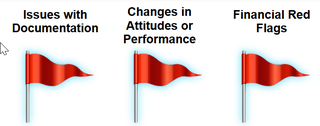
Issues with Documentation
- Refusal or reluctance to turn over documents
- Altered or missing documents
- False signature or incorrect person signing
- Destruction of documents
Changes in Attitudes or Performance
- Unreasonable explanations
- Deviation from standard procedures
- Decrease in quality of work
- Preventing full transparency on issues regarding money, such as review and approval of expenses
Financial Red Flags
- Shifting costs from one account to another, or one program to another
- Duplicate invoices
- Use of several different banks or bank accounts, or frequent bank changes
- Living and spending outside of financial means
Examples of Fraud
Below are a few examples of fraud that can happen in grant programs:
- theft and embezzlement by grant administrators or program directors;
- bribery of grantee officials;
- falsifying information in grant applications, contract proposals, and other documents including invoices;
- influencing Government employees to award a grant or contract to a particular company, family member, or friend;
- inflating salaries for staff, family, or friends;
- billing for work never performed;
- using grant funds for personal travel and other personal items; and
- falsifying or not verifying the eligibility of a beneficiary.
Job Aid
Fraud, Waste, and Abuse and OIG
Office of Inspector General
OIG is at the forefront of the Nation's efforts to fight fraud, waste, and abuse in HHS grants, IHS, and other HHS programs such as Medicare. OIG fights fraud by:
- preventing, detecting, and deterring fraud, waste, and abuse;
- fostering sound financial stewardship and reduction of improper payments; and
- holding wrongdoers accountable and recovering misspent public funds.
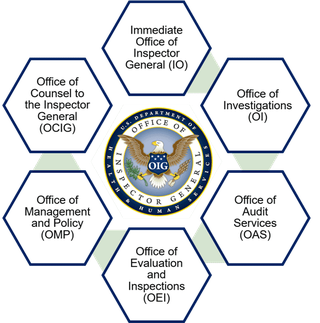
OIG Components
OIG carries out its mission using a multidisciplinary, collaborative approach, with six components playing a vital role in Government oversight.
OIG Work in AI/AN Communities
Under the Inspector General Act of 1978, as amended, OIG has the statutory responsibility to provide oversight over all HHS programs. Specifically, OIG has the duty to investigate fraud, waste, and abuse and promote the economy and efficiency of HHS programs, typically through audits and evaluations. The subjects of our audits, evaluations, and investigations include, but are not limited to:
- fraudulent use of grant funds related to HHS programs such as the Low Income Home Energy Assistance Program, Temporary Assistance for Needy Families, and Head Start;
- quality of care;
- ineffective program internal controls;
- IHS employee misconduct;
- Medicare and Medicaid fraud;
- prescription drug diversion;
- benefit enrollment fraud; and
- Tribal 638 program fraud.
Examples of OIG work
OIG oversight seeks to improve the economy and efficiency of HHS’s AI/AN programs, as well as to fight fraud, waste, and abuse.
Select each tab below to see examples of OIG's work.
A former Director of the Tribal Temporary Assistance for Needy Families program engaged in a variety of schemes designed to overpay Temporary Assistance for Needy Families' clients or to pay people who were ineligible in exchange for a portion of the payment. OIG, along with other law enforcement agencies, investigated the former Director. She was sentenced to 30 months of custody, 30 months of supervised release, restitution in the amount of $297,612, and a $100 special assessment based on one count of theft from an Indian Tribal Government receiving Federal Grants. Additionally, the Tribe was subject to a penalty for misuse of funds due to the lack of safeguards. As such, the amount of Tribal Temporary Assistance for Needy Families funds to which the Tribe was entitled for the next year was reduced by this penalty amount.
A tribally run Head Start grant program did not have effective controls to restrict accounting system access. Additionally, the Tribe did not have effective internal controls to restrict access to executive signature stamps because the Principal Chief was not maintaining his own signature stamp. Lack of these restrictions could allow an unauthorized employee to make inappropriate purchases. OIG audited the Tribe and recommended that it (1) implement controls and develop policies and procedures that restrict access to the accounting system and the executive signature stamps and (2) develop and implement policies and procedures regarding the purpose and use of the signature stamps.
OIG evaluated IHS and found underlying challenges, such as staffing challenges and limited resources, that may hamper IHS's ability to provide quality care. OIG noted that at times these issues have had serious consequences, including causing difficulty maintaining compliance with Federal quality-of-care requirements. OIG concluded that IHS should implement a variety of strategies, such as developing an agencywide strategic plan with actionable initiatives and target dates, to improve hospital quality and agency operations.
OIG investigations revealed that some Tribes and Tribal organizations, or their officials, did not adequately protect IHS funds distributed through contracts and compacts, or Medicare, Medicaid, and Children’s Health Insurance Program reimbursements. In some cases vital health care services for Tribal members were jeopardized. These funds must be used in accordance with applicable Federal law, including the Indian Self-Determination and Education Assistance Act and the Indian Health Care Improvement Act. In 2014, OIG released an OIG Alert, cautioning Tribes about their obligations, under Federal law, to safeguard and appropriately spend funding from Federal Health Care Programs. These programs provide urgently needed funding for health care services for AI/AN. The OIG Alert was a reminder that those who commit fraud involving HHS programs are subject to possible criminal, civil, and administrative sanctions.
In the lessons that follow, we go into greater detail regarding the Federal laws that OIG enforces to prevent or prosecute fraud committed against HHS grant programs. In addition to the legal authorities addressed in those lessons, individuals and entities suspected of engaging in grant fraud may be criminally charged under a wide variety of other Federal criminal statutes, including wire fraud, theft of public money, and theft or bribery concerning programs receiving Federal funds. See the Resources to Help You section for links to resources that provide more information.
Preventing Fraud, Waste, and Abuse
OIG Fraud, Waste, and Abuse Prevention Efforts
OIG conducts investigations, audits, and evaluations pursuant to its duties as listed in the Inspector General Act of 1978; however, OIG is also funded to engage in fraud, waste, and abuse prevention efforts. OIG has several such prevention efforts in place, including providing education to grantees through presentations and publishing audits, evaluations, and trainings like this one.
OIG Prevention Efforts in the AI/AN Community
OIG engages the AI/AN community to proactively avert fraud, waste, and abuse. Flip over each card to learn about these efforts.

OIG maintains a website containing resources for Tribal recipients of HHS funds and provides details of OIG oversight work focusing on HHS grants to Tribal entities.

OIG has developed online training (including this one) to assist Tribal grantees and health care providers to build robust compliance programs.

OIG gives presentations to Tribes and Tribal members, including outreach and training sessions.
Join OIG in Preventing Fraud, Waste, and Abuse
There are many ways you can join in the fight to prevent fraud, waste, and abuse. One way is to establish a compliance program to proactively avoid the vulnerabilities we've covered. Another way is to build robust internal controls as part of your compliance program. You can also use a single audit as an effective tool to help your organization. Check out our website for trainings on these topics.
Reporting Fraud, Waste, and Abuse
OIG Hotline
One method of reporting fraud, waste, or abuse is to contact the OIG Hotline. The OIG Hotline accepts tips and complaints from all sources about potential fraud, waste, and abuse in HHS programs. Complaints can be anonymous, and confidentiality can be requested (more information here).
Select the plus sign on each tab below to learn what you should do before you submit a complaint.
Review the information related to the types of complaints OIG investigates and does not investigate.
Be prepared to provide as much information as possible about the allegation and those involved, including:
- the name and contact information of the individual or business related to your complaint including, if available, addresses, telephone numbers, email addresses, etc.;
- a narrative explaining the nature, scope, time, and how you came to learn about the activity in question;
- the name and contact information of any individual who can help corroborate the information you are reporting; and
- supporting evidence in electronic format that can be uploaded with your report, including, if available, email communications, documents, billing records, and photographs.
- Online
- telephone at: 1-800-HHS-TIPS (1-800-447-8477)
- fax at: 1-800-223-8164
- TTY at: 1-800-377-4950
Below is a job aid with the basics on reporting fraud, waste, and abuse to OIG.
Job Aid
Whistleblower Protections
OIG protects whistleblowers—current and former HHS employees, employment applicants, contractors, subcontractors, personal services contractors, grantees, and subgrantees who disclose information about a perceived wrongdoing to OIG. These people and other authorized individuals are protected from retaliation under the:
- Whistleblower Protection Act of 1989,
- National Defense Authorization Act 41 U.S.C. § 4712, and
- Presidential Policy Directive 19 (PPD-19).
Additionally, the law protects members of the U.S. Public Health Service Commissioned Corps from retaliation for making public disclosures under the Military Whistleblower Protection Act, 10 U.S.C. § 1034, and they cannot be restricted from communicating with OIG or a member of Congress. These laws protect whistleblowers who report specific wrongdoing.
Criteria for Protection
HHS OIG considers a disclosure to be protected if it meets the following criteria:
- The disclosure is based on a reasonable belief that the alleged wrongdoing occurred. The definition of wrongdoing varies slightly depending on your place of employment.
- The disclosure is made to a person or entity authorized to receive it. OIG protects individuals who reasonably believe they submitted evidence of wrongdoing to the OIG, Congress, law enforcement agency, contractor/grantee management official, or other authorized officials. However, some limitations exist as to who is authorized to receive a disclosure depending upon your place of employment.
Protected Disclosures
This Whistleblower Protection Information website outlines the protected disclosures that may be made under Federal whistleblower laws and authorized recipients for those disclosures.
Additional Whistleblower Information
In addition to the information above, there are other programs and agreements in place to protect whistleblowers. Select the plus signs below to learn information that potential whistleblowers should be aware of prior to reporting to OIG.
Making the decision to report fraud, waste, or abuse found within your place of employment is a courageous decision and one that may be necessary to protect Government systems from fraud, waste, and abuse. Potential whistleblowers should be aware of the following information while making their reports to OIG:
- Employees who report allegations of wrongdoing must provide sufficient information for the OIG to commence an inquiry. This information is particularly important when the employee wishes to remain confidential. Employees who file a complaint alleging that they experienced whistleblower retaliation are strongly encouraged to disclose their identities to OIG to allow for effective investigation of the alleged retaliation. Anonymous whistleblower retaliation complaints may be declined for investigation.
- Section 7(b) of the Inspector General Act of 1978 prohibits OIG from disclosing the identity of an employee from whom it has received a complaint or information without the consent of that employee. A notable exception to this rule is that OIG may disclose identifying information (without employee consent) when the disclosure is unavoidable for the purpose of an investigation. However, employee complaints are important to OIG, and it carefully maintains the information it receives.
- Employees must be candid and truthful with investigators or others to whom they disclose alleged wrongdoing or mismanagement.
- An employee's right to protection against reprisal does not extend immunity for the employee's own involvement in wrongdoing or mismanagement.
- Agencies are responsible for ensuring that contractors, grantees, subcontractors, and subgrantees inform their employees in writing of the rights and remedies afforded to them as whistleblowers under § 41 U.S.C. § 4712.
Making the decision to report fraud, waste, or abuse found within your place of employment is a courageous decision and one that may be necessary to protect Government systems from fraud, waste, and abuse. Potential whistleblowers should be aware of the following information while making their reports to OIG:
- Employees who report allegations of wrongdoing must provide sufficient information for the OIG to commence an inquiry. This information is particularly important when the employee wishes to remain confidential. Employees who file a complaint alleging that they experienced whistleblower retaliation are strongly encouraged to disclose their identities to OIG to allow for effective investigation of the alleged retaliation. Anonymous whistleblower retaliation complaints may be declined for investigation.
- Section 7(b) of the Inspector General Act of 1978 prohibits OIG from disclosing the identity of an employee from whom it has received a complaint or information without the consent of that employee. A notable exception to this rule is that OIG may disclose identifying information (without employee consent) when the disclosure is unavoidable for the purpose of an investigation. However, employee complaints are important to OIG, and it carefully maintains the information it receives.
- Employees must be candid and truthful with investigators or others to whom they disclose alleged wrongdoing or mismanagement.
- An employee's right to protection against reprisal does not extend immunity for the employee's own involvement in wrongdoing or mismanagement.
- Agencies are responsible for ensuring that contractors, grantees, subcontractors, and subgrantees inform their employees in writing of the rights and remedies afforded to them as whistleblowers under § 41 U.S.C. § 4712.
While Section 3(d) only applies to Federal employees, many of the Coordinator’s education and outreach responsibilities have informally been extended to HHS contractors and grantees. By law, the Coordinator is prohibited from acting as a complainant's legal representative, agent, or advocate.
The Whistleblower Protection Enhancement Act of 2012 requires that the following statement be included in all nondisclosure policies, forms, or agreements applying to current or former Federal Government employees:
These provisions are consistent with and do not supersede, conflict with, or otherwise alter the employee obligations, rights, or liabilities created by existing statute or Executive order relating to (1) classified information, (2) communications to Congress, (3) the reporting to an Inspector General of a violation of any law, rule, or regulation, or mismanagement, a gross waste of funds, an abuse of authority, or a substantial and specific danger to public health or safety, or (4) any other whistleblower protection. The definitions, requirements, obligations, rights, sanctions, and liabilities created by controlling Executive orders and statutory provisions are incorporated into this agreement and are controlling.
Similarly, grantees and contractors are prohibited under 41 U.S.C. § 4712(c)(7) from enforcing agreements that include whistleblower protection waivers. It provides that the whistleblower protection rights and remedies provided to grantees and contractor employees cannot be waived by agreement, policy, form, or condition of employment.
Am I eligible to report whistleblower retaliation?
Visit the OIG Check Your Eligibility website to determine whether you are eligible to report whistleblower retaliation.
Learn more about whistleblowing in the job aids here.
Job Aids
Self-Disclosing Fraud, Waste, and Abuse
OIG’s Grant Self-Disclosure Program provides grantees and subgrantees with a framework for disclosing, coordinating, evaluating, and resolving potential violations of law relating to their awards or sub-awards. Grantees must properly manage the Federal funds they are awarded and meet grant program requirements. However, if grantees learn of a potential violation of law relating to their award—regardless of whether the potential violation breaches Federal criminal, civil, or administrative law and regardless of how the grantee learned about the potential violation—they should:
- investigate the potential violation,
- assess any losses suffered by the Federal programs,
- take corrective action, and
- make full disclosure to the appropriate authorities.
The HHS OIG Grant Self-Disclosure Program provides a means to meet these obligations. Grantees may disclose conduct causing civil fraud liability and must disclose certain criminal conduct. Some disclosures are mandatory while others are voluntary. Read more about disclosing below.
Mandatory Disclosures
Under Federal grant rules, grantees of (and applicants for) Federal awards are required to timely disclose in writing all violations of Federal criminal law that involve fraud, bribery, or gratuity violations potentially affecting their award. Under the terms and conditions of the award, grantees must make these disclosures to both the HHS awarding agency and OIG. Disclosure under HHS OIG’s Grant Self-Disclosure Program fulfills the obligation to disclose to OIG consistent with 45 CFR. § 75.113 and the terms and conditions of the award. Separate disclosure must also be made to the HHS awarding agency.
Voluntary Disclosures
Grantees may voluntarily disclose conduct causing liability under the Civil Monetary Penalty Law (CMPL), 42 U.S.C. § 1320a-7a, or any other conduct—such as conduct that might violate civil or administrative laws—that does not clearly fall within the scope of offenses described in the Federal grants rules.
Resolution and Benefits of Self-Disclosure
OIG promotes self-disclosure by any discloser, who can be any grantees, applicant, or anyone else who may have criminal, civil, or administrative liability related to any HHS grant, contract, or other agreement. Where appropriate, resolution of disclosed matters may include OIG’s release of its CMPL administrative sanction authorities (i.e., civil monetary penalties and exclusion). Prompt disclosure, full cooperation, and robust internal investigation of potential violations are key indicators of an grantees' integrity. As such, OIG rewards disclosers that self-disclose potential violations and cooperate during the disclosure process by imposing a lower penalty amount than would normally be required.
The job aid below summarizes the Self-Disclosure Program.
Job Aid
Federal Guidance, Rules, and Laws Applicable to Grantees
Recipients of HHS grants must comply with a variety of Federal rules, requirements, guidance, and policies. Organizations often ensure they comply with these applicable rules and regulations by using a program to implement compliance plans and institute internal controls intended to guard against and prevent fraud, waste, and abuse of HHS funds. If funds are not appropriately used for their intended purposes, the Federal Government has a variety of laws through which it can recover those funds, penalize wrongdoers, and suspend or debar individuals or entities from receiving or participating in Federal grants or contracts. It is important to understand what conduct violates these Federal fraud and abuse laws.
Federal Guidance for Grantees
The Federal Government has issued direction in the form of rules, requirements, guidance, and policies for grantees on a wide range of topics from grantee eligibility to measuring and reporting the outcomes of the grant program. This information is intended to, among other things, guide decisions, provide clarity, help ensure uniformity of basic requirements across grantees, and assist in preventing fraud, waste, and abuse.
One example is Uniform Administrative Requirements, Cost Principles, and Audit Requirements for Federal Awards (commonly called “Uniform Grants Guidance”). The Uniform Grants Guidance is a “government-wide framework for grants management” that provides guidance for the life cycle of the grant award, from vetting an applicant to closing out the grant. The purpose of the Uniform Grant Guidance is to reduce the administrative burden on grantees and guard against fraud, waste, and abuse. The guidance directs grantees to focus audits on areas that have previously been identified as risk areas for fraud, waste, and abuse. Additionally, the guidance emphasizes that grantees should have strong internal controls to guard against these risks.
Other policies and regulations with which recipients of HHS grants must comply cover topics such as lobbying, reporting, and efficient spending on various items such as food or conferences. You can find more detailed information on the HHS Grants Policies & Regulations website which includes a link to OIG’s Grants Fraud Alert.
Federal Fraud and Abuse Laws
There are multiple Federal fraud and abuse laws that apply to grantees. These laws are generally designed to make sure that the funds are being used for their intended purposes and provide services to the beneficiaries of the grants. It is important to understand what conduct violates these Federal fraud and abuse laws applicable to grantees.
Select a tab below to learn more about the False Claims Act, Civil Monetary Penalty Law, and Suspension and Debarment remedies, all of which are fraud and abuse laws.
The False Claims Act (FCA) (31 U.S.C. § 3729-3733) allows the Federal Government to recover damages and penalties from grantees that knowingly submit, or knowingly cause to be submitted, false or fraudulent claims to the Federal Government. Basically, the FCA protects the Government from being overcharged, mischarged, or sold shoddy goods or services. The FCA defines "knowingly" to include not only actual knowledge, but also instances in which the person acted in deliberate ignorance or reckless disregard of the truth or falsity of the information.
The FCA prohibits filing a claim for an item or service that was not actually provided as claimed. Every time you submit a claim, you are, essentially, certifying that all the criteria for payment for that item or service on that claim have been met. Here is an example:
A grantee was awarded Federal grant funds for the purposes of paying for substance abuse treatment services to members of a Tribal community. Instead of limiting use of the funds for treatment services, the grantee knowingly used the funds to also pay for prohibited expenses, such as the clients’ rent, mortgage, utilities, and auto repairs.
FCA lawsuits can be filed by the Federal Government and by whistleblowers, or relators, on behalf of the Federal Government.
Liability under the FCA may be up to three times the amount paid plus a sizeable per claim penalty. For example, a provider who submits 100 false claims worth an aggregate of $500,000 may be liable for up to $1.5 million plus an additional penalty for each of the 100 claims.
The Civil Monetary Penalty Law (CMPL) (42 U.S.C. § 1320a-7a) protects the Government from a variety of improper conduct, including the submission of false claims to HHS grant programs, Federal contracts, or Federal health care programs.
Both the FCA and the CMPL are used to address similar improper conduct. The Department of Justice partners with Federal entities like HHS, OIG, and IHS to bring cases under the FCA in Federal court. The CMPL is an alternate remedy through which OIG can initiate cases before an HHS administrative law judge.
OIG has the authority to seek penalties and exclusion from Federal health care programs against an individual or entity based on a wide variety of prohibited conduct related to Federal health care programs, HHS grants, and HHS contracts. Specifically, knowingly submitting a false claim to an HHS grant or contract (including agreements under PL 638) could result in the imposition of civil monetary penalties, which can be up to $20,000 per claim for the submission of false claims. In addition to that amount, the Government may seek to recover up to three times the number of damages or loss to the program. Also, committing fraud against an HHS grant program could result in exclusion from Medicare, Medicaid, and all Federal health care programs.
For example, the OIG may seek penalties under the CMPL against individuals or entities that:
- present a false or fraudulent specified claim under an HHS grant,
- make a false statement or omission to HHS about an HHS grant,
- make or use a false record related to an HHS grant,
- conceal or improperly avoid an obligation owed under an HHS grant, or
- fail to grant access to OIG.
Another Government remedy to be aware of is suspension and debarment.
Suspension is a temporary ineligibility to receive or participate in Federal grants or contracts if there is an immediate need to protect the Government by cutting off the availability of Federal funding for a set period of time.
Debarment is an important administrative tool that helps protect HHS and all Government grant and contract funds. Debarment is an agency action that makes an individual or entity ineligible to receive or participate in Federal grants or contracts for several years. HHS uses debarment to protect itself from parties it determines not to be presently responsible to do business with the Government.
Course Summary
The Federal Government funds grants and programs for services intended to improve the health and well-being of the AI/AN community. Unfortunately, sometimes the funds intended to provide services are stolen through fraudulent schemes. Fraud diverts these resources away from the community and into the pockets of wrongdoers. To ensure that these funds are used for intended purposes, it is important to know the vulnerabilities that could lead to fraud. These vulnerabilities include external and internal pressure to commit fraud, the opportunity to commit fraud, and rationalization, or a justification, to commit fraud.
OIG is at the forefront of the Nation's efforts to fight fraud, waste, and abuse in HHS grants, IHS, and other HHS programs. OIG does so by 1) preventing, detecting, and deterring fraud, waste, and abuse; 2) fostering sound financial stewardship and reducing improper payments; and 3) holding wrongdoers accountable and recovering misspent public funds. OIG undertakes prevention efforts, such as education through publication of audits, evaluations, and trainings like this one, and develops and provides presentations on guidance for compliance programs.
With your help, OIG can increase the detection and prevention of fraud, waste, and abuse to improve the quality, safety, and value of HHS programs. If you suspect fraud, waste, or abuse, you may report the information that suggests dishonest or illegal activities involving HHS programs.
- One method of reporting fraud, waste, or abuse is to contact the OIG Hotline. OIG protects certain current and former HHS employees; HHS employment applicants; and HHS contractors, subcontractors, personal services contractors, grantees, and subgrantees who disclose information to OIG through mechanisms such as the OIG hotline.
- Another method of reporting is to self-disclose if you suspect the law or program requirements have been violated. OIG’s Grant Self-Disclosure Program provides a framework for disclosing, coordinating, evaluating, and resolving potential violations of law relating to awards or subawards.
Recipients of HHS grants must also comply with the Uniform Grants Guidance and a variety of HHS policies and regulations such as those found in the HHS Grants Policy Statement. Organizations often ensure they comply with these applicable rules and regulations by using an internal control program to deploy compliance plans and institute controls intended to guard against and prevent fraud, waste, and abuse.
Additionally, there are multiple Federal fraud and abuse laws that apply to grantees. These laws, such as the FCA and the CMPL, help make sure the Government is getting what it pays for and that those services are of sufficient quality and are safe. It is important to understand what conduct related to grantees violates these laws. For example, the FCA prohibits filing a claim for an item or service that was not actually provided as claimed.
Resources to Help You
OIG Authorities
OIG enforces a variety of Federal laws to prevent or prosecute fraud committed against HHS programs or other misconduct, whether committed by providers, contractors, grantees, or HHS employees. For your reference, we have listed the most important of these laws in the document below.
Additional Resources
The document below, Additional Resources for Grantees, contains links to resources such as OIG's Grant Fraud website.
Additional Trainings
After you complete this training, consider taking our additional compliance-related trainings that can be found on our website and are described below.
Compliance 101: This training gives an overview of compliance, what it is, why it is important, who is responsible for it, where and when it happens, and how to get started with a compliance program for your organization. If you have not thought about compliance before, this training is a great place to start.
Compliance 201 for Grantees: This training, specifically for grantees, goes into greater depth than Compliance 101. It focuses on the Seven Fundamentals of Compliance; important grantee and contract fraud and abuse laws; and the remedies available to the Government if an entity commits violations.
Compliance for Governing Boards: This training focuses on the role of Governing Boards in providing compliance oversight. It describes the four actions OIG recommends Governing Boards take to effectively exercise their oversight responsibilities.
Job Aids
These printable job aids are quick references for the topics covered in the course.
Knowledge Check
Please take the short knowledge check assessment by clicking the link below. After you answer questions about what you’ve learned, you’ll be asked a few questions that can help us improve this course in the future. After you click submit, you’ll receive your Certificate of Completion.
Let's evaluate your learning!